
What is a foundry? Where cutting-edge labs forge career-ready skills.
What is a foundry? Where cutting-edge labs forge career-ready skills.
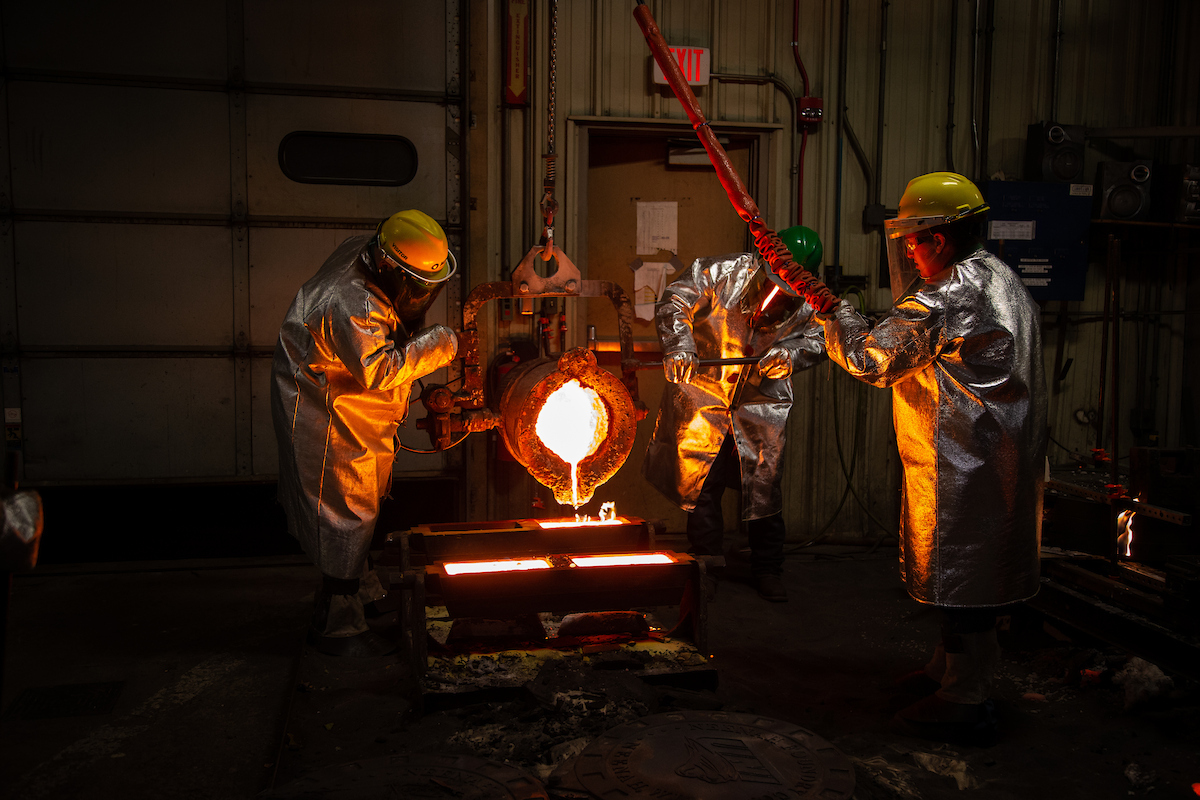
If you’re interested in an engineering or manufacturing career, real-world experience will help set you up for success. Working in a foundry in college is one way to obtain that experience, contribute in a meaningful way and learn more about job opportunities that await in your future. Whether you see yourself working in a foundry long-term or not, consider seeing what student foundry jobs exist at your university or college. Here’s what you should know before applying!
What is a foundry?
From pipe components to engine parts, the vast majority of all manufactured goods start as metal castings in a foundry. This makes these facilities vital to the manufacturing process. The professionals who work in a foundry create both functional and decorative metal objects.
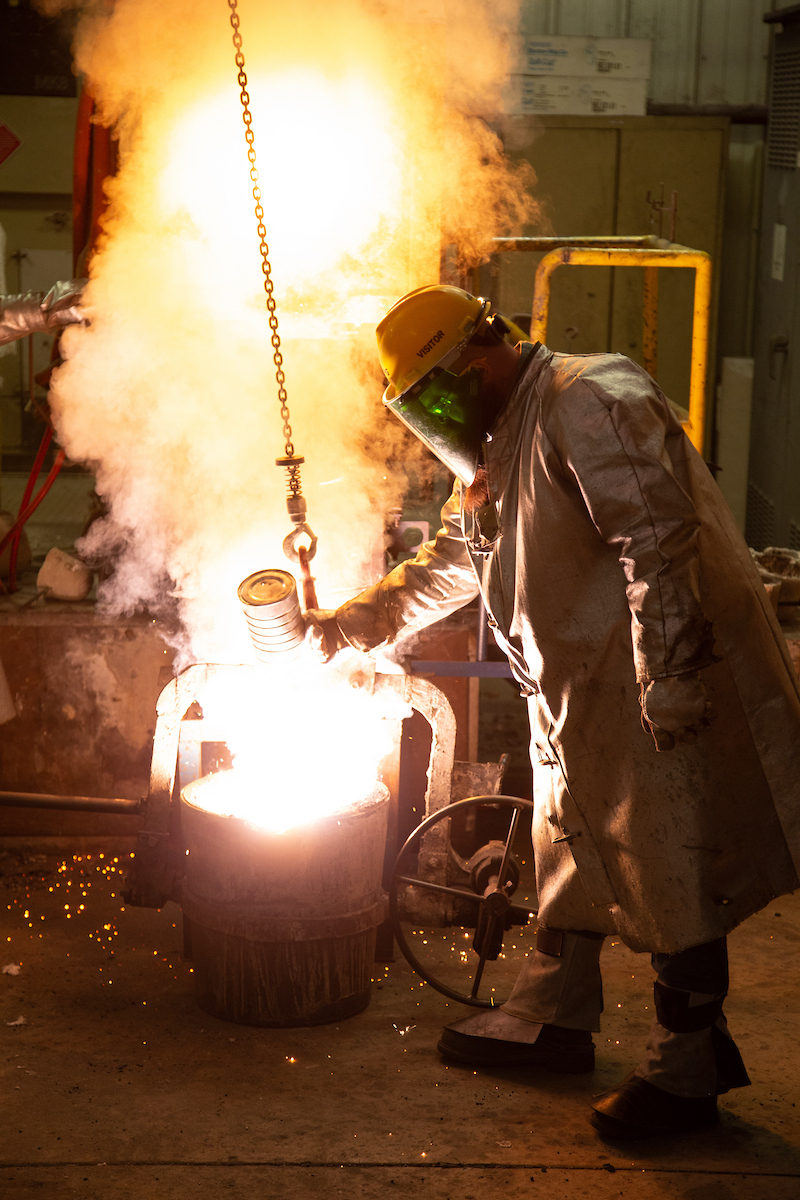
Crafting these metal objects is an extensive process that involves pouring liquid metal into a mold. As you might imagine, the metal has to be heated to extremely high temperatures (above 2600 degrees Fahrenheit!) to be melted.
Foundry workers 3D print with sand to create molds, melt the metal, pour it into molds, cool it, then remove the metal from the molds before cleaning the object and applying any finishing touches. Foundry employees must create molds, cast and monitor the metal, and maintain the equipment necessary for the process. Their jobs require physical strength and scientific knowledge. If you have both brains and brawn, a foundry job could be an excellent fit!
Why work in a foundry in college?
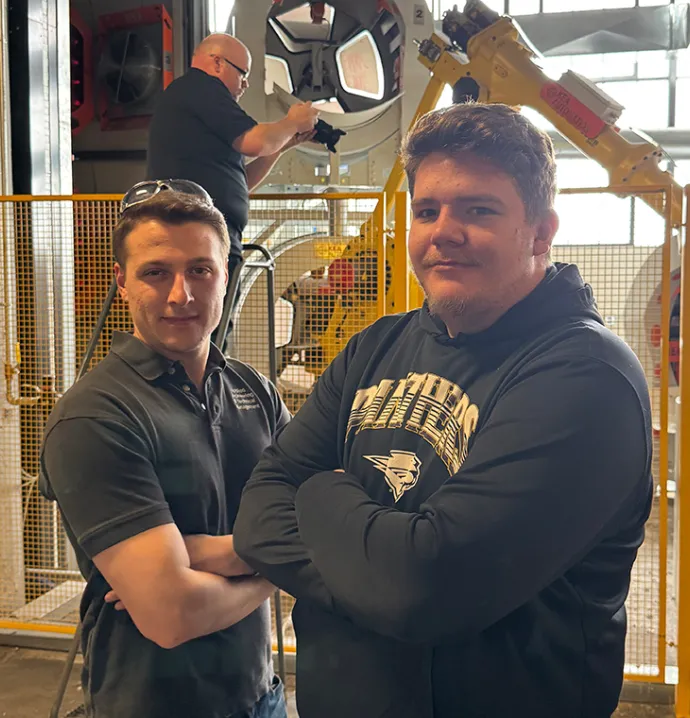
Students can work as student designers and lab technicians in an academic foundry environment. Both positions support applied research projects under the direction of the project director, project engineers and research associates.
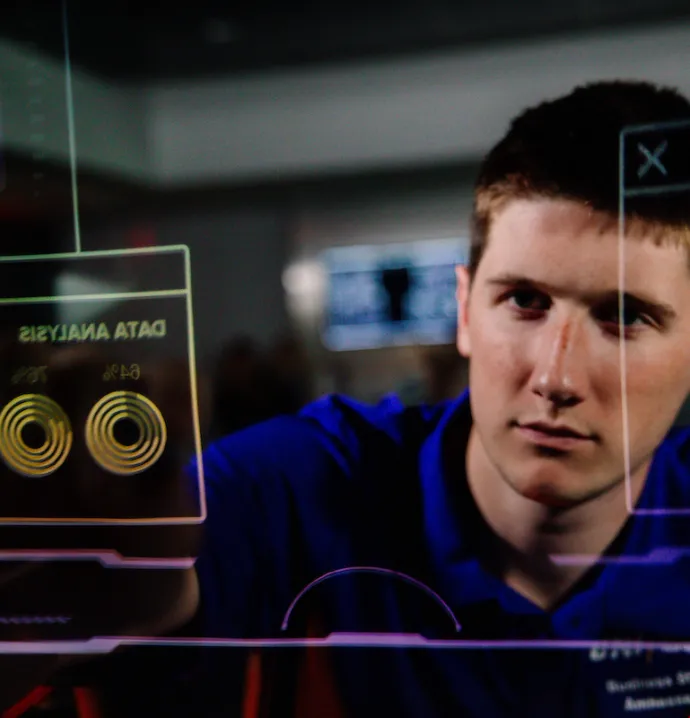
If you’re hoping to become an engineer, working alongside some experienced pros will be incredibly helpful. In addition, you may have opportunities to learn skills related to computer-aided design, robotics and automation, Industry Internet of Things (IIoT), and additive manufacturing. All of these skills look great on a resume!
6 foundry jobs and other careers you’ll qualify for
Working in a foundry is an incredibly valuable experience. It will set you up for some exciting career opportunities. Here are a few of the top foundry jobs (and some jobs outside of foundries) you could land with the help of a metal casting background.
1. Metallurgist
A metallurgist is the person responsible for manipulating metals to create specific shapes or properties. They most commonly work in aerospace and parts manufacturing, but they may also work in architectural engineering, scientific research, electronic component manufacturing or the federal government. They must have a strong scientific background and be able to review relevant peer research.
2. Process engineer
From dairy products to cosmetics – in a way, a process engineer is like a chef in a manufacturing facility who uses chemical and biochemical processes to turn raw materials into a finished product. To succeed as a process engineer, you’ll need to have excellent troubleshooting skills, a strong understanding of chemical engineering and a knack for process improvement.
3. Quality control engineer
Quality control engineers get paid to be perfectionists at work, ensuring that every item meets high quality standards. The items they check for quality purposes could be anything from pharmaceuticals to electronics. They might work in a manufacturing facility or in a laboratory, checking for product defects and making sure federal regulations and industry standards are being followed.
4. Foundry technician
If you can’t get enough of the foundry life, you may want to continue working in this environment after graduation as a foundry technician. These professionals oversee each step of the metal casting process from preparing molds to pouring the metal and conducting quality checks. Successful foundry technicians have a keen eye for detail and strong understanding of the advanced equipment they use on the job.
5. Plant Manager
Working in a foundry also sets you up to be a plant manager, either at a manufacturing facility or a foundry. These leaders manage the day-to-day manufacturing operations. They ensure work gets done safely and within budget while producing high-quality goods. They optimize each area of the production process.
6. Industrial engineer
From design to development and testing, industrial engineers oversee the industrial production process. Some of the sectors they work in include transportation equipment manufacturing, electronics manufacturing and machinery manufacturing. This career is on track to grow much faster than most, making it a great way to put your foundry skills to work.
Work at one of the largest and most advanced foundries in North America
Do you want the experience a foundry provides? There’s no better place to go than the University of Northern Iowa, home to one of the largest and most advanced foundry labs on the continent! You’ll be trusted with cutting-edge research being done using highly advanced equipment. To see the foundry in action, stop by an Open Melt Night, hosted by the American Foundry Society's UNI chapter.
If you’re pursuing one of our engineering degrees, working in the foundry will be a fantastic real-world application of what you’re learning in class. The newly renovated Applied Engineering Building on UNI’s campus provides ample state-of-the-art laboratories and spaces. It’s yet another way that UNI students prepare for success in the real world after graduation.
From foundry jobs to various engineering professions, UNI is the place for hands-on learners with problem-solving minds. Learn more about foundry opportunities then browse our engineering degrees.