
UNI athletic training students gain hands-on experience through emergency simulation
UNI athletic training students gain hands-on experience through emergency simulation
Sirens sound and roles are quickly assigned as responders rush to a patient in crisis. A football player is suffering heatstroke in the middle of a game –- and every second counts. Paramedics, EMTs and nurses are on the scene, along with UNI athletic trainers, who work together to help the player in distress. It’s a fast-paced situation that involves all hands on deck.
Luckily, this is a training exercise –– offering students from the University of Northern Iowa's master of athletic training program hands-on experience that mirrors the pressure and teamwork required in actual health emergencies.
In the emergency scenario, UNI students joined nursing students from Allen College and EMT students from Hawkeye Community College. And while the experience was simulated, the event delivered the stress and urgency that comes with real-life events. “I’ve never been in this kind of situation before so the fear of the unknown made me a little overwhelmed,” said a UNI athletic training student.
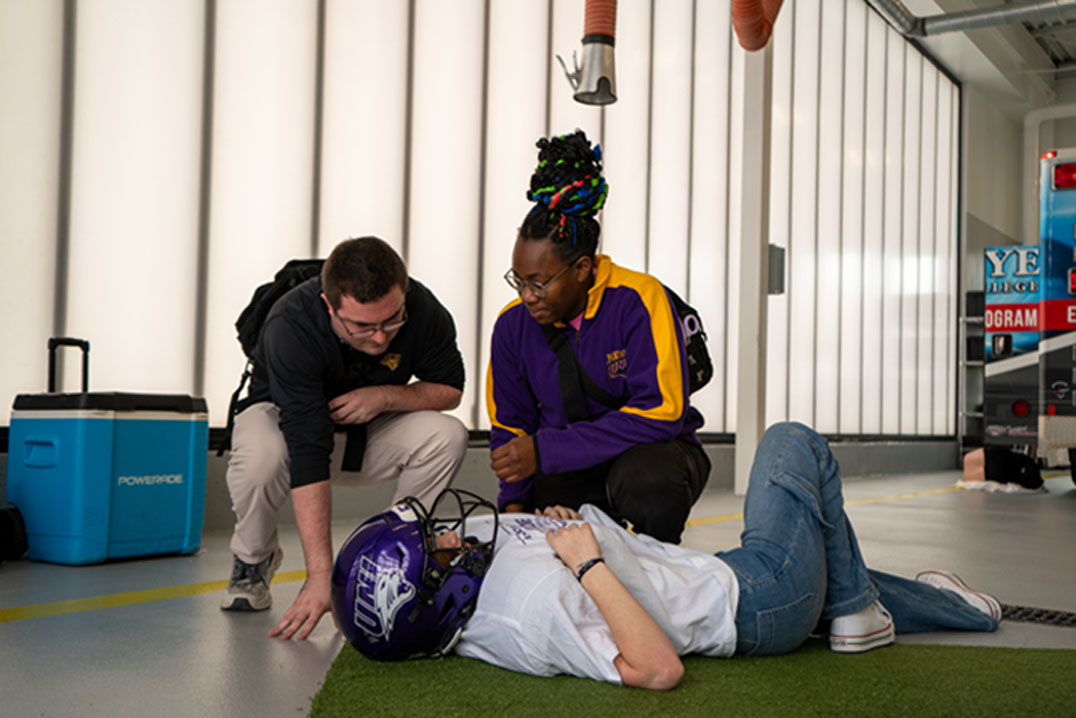
Students stepped into their professional roles and learned how health care providers from different fields communicate during high-stakes moments.
For UNI’s athletic training students, the simulation was an opportunity not only to apply what they've learned in the classroom but to better understand their role within a broader health care team.
“One of our biggest takeaways from this is that other health care professions can learn about our scope of practice as athletics trainers and then it also puts students in a real-life scenario,” said Tricia Schrage, professor of athletic training at UNI. “When you hand over the patient, you never really get to see what happens next. And so whether or not in real life they truly will be a part of the transition, it puts their mind at ease to know if they do have to be in the transition, they know what to expect and what their role may be — and then what it’s like going into the ER.”
Throughout the simulation, UNI students worked alongside student nurses, paramedics and EMTs, experiencing not only how to respond in an emergency but how each profession relies on another.
Athletic trainers are first to respond, as they’re typically present during sporting events. Nursing students quickly joined the scenario, offering additional information and assisting the athletic trainers as they cared for the patient. Once called to the scene, EMT students arrived to provide emergency care and transportation.
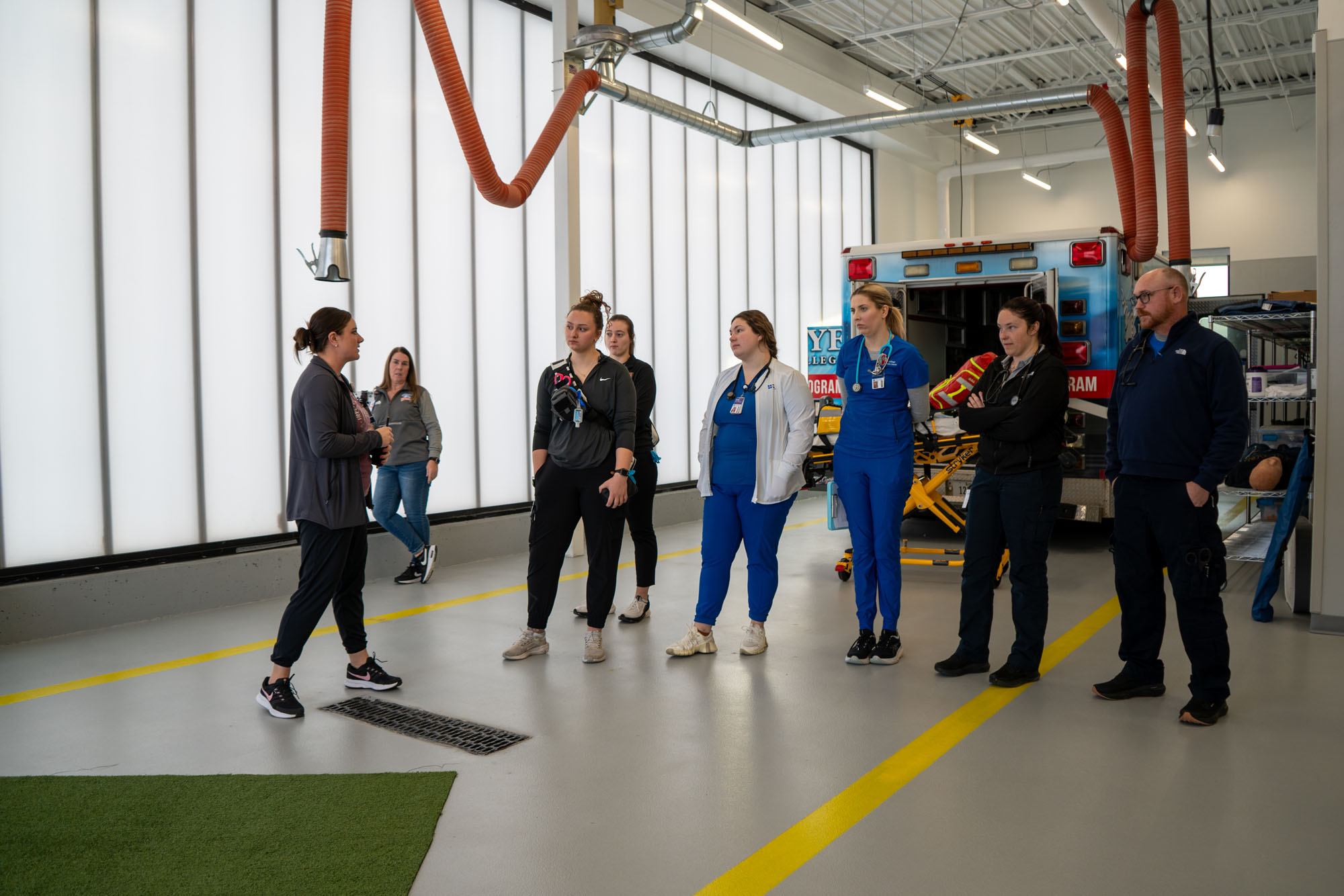
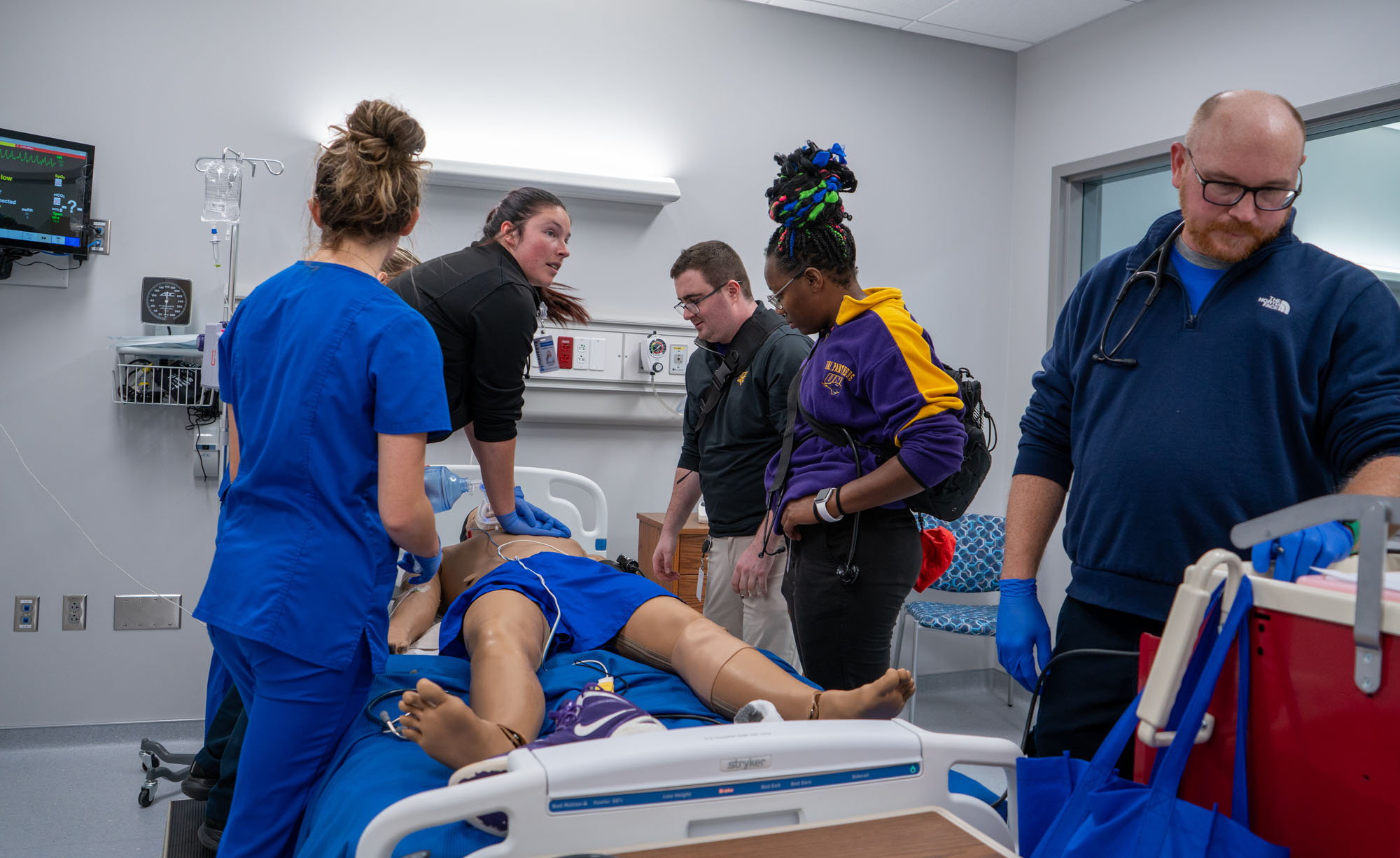
Photos from Evan Pattee at Hawkeye Community College.
The fast-paced simulation pushed students to communicate effectively and recognize how each role plays a crucial part in delivering comprehensive patient care.
Hands-on opportunities like this are central to UNI’s master of athletic training program, since athletic trainers are often first to respond when injuries and health emergencies occur during practices and competitions.
From their first year, students begin practicing real-time emergency care and assessment, skills they’ll rely on when treating athletes on the field. As they progress, coursework expands into clinical experience and preparation for the Board of Certification exam, building confidence for situations they’ll face throughout their careers.
UNI also offers a 3+2 blended program, enabling students to earn both their bachelor’s degree and master of athletic training in just five years — an efficient pathway into a career where they can make a meaningful impact as health care professionals.
By the end of the simulation, students walked away with a new confidence, a deeper understanding and a clear sense of how their future roles will intersect with others in the field.