
Theatre that transforms
Theatre that transforms
Theatre that transforms
How UNI students are making a lasting impact through community engagement
Through a growing slate of community engagement initiatives, the UNI Department of Theatre is bringing the transformative power of theatre to new audiences, while helping students redefine what it means to be a theatre artist.
“Theatre is by its very nature collaborative and experiential,” says William Hickman, head of the UNI Department of Theatre. “It's something that we want our community to engage with, be a part of, and create together. It’s an expressive art that requires creative problem solving and communication – it teaches one to listen as well as to speak out. As a part of the Cedar Valley, our goal is to deepen TheatreUNI’s connection to the area, its people, and to the needs of the community.”
That philosophy has guided UNI Theatre’s recent outreach efforts — from free youth matinees to collaborative performances with older adults in senior care facilities.
For students, these experiences offer more than a chance to perform; they provide meaningful insight into how theatre can educate, advocate, and unite.
“Participation in community engagement projects is critical in order to prepare UNI students for their ethical, reciprocal, and quality partnerships in the future,” says Kendra Kahl, assistant professor of Theatre for Youth and Communities at UNI. “We want them to go out into the world and be prepared to work in a variety of theatres, communities, and contexts. Additionally, sometimes students don’t know all of the places that theatre can go. One of my favorite things as an educator is seeing their ‘aha’ moments when they are working with children or community members. The work we do is vital for the longevity of community-based theatre.”

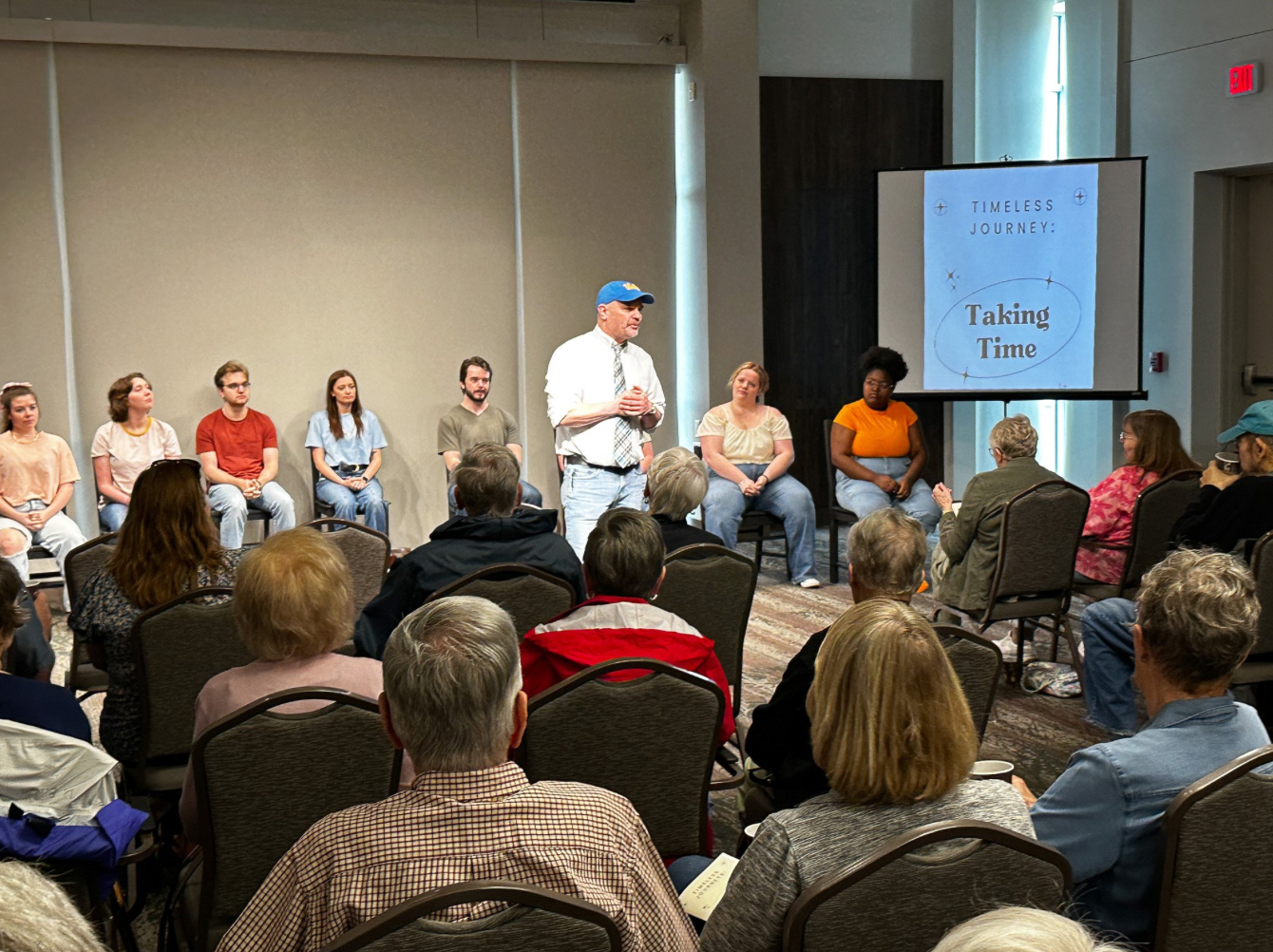
One of the department’s recent community outreach initiatives is the “Timeless Journeys” project. This project was developed in partnership with the UNI Department of Theatre and Western Home Communities care facility. The project paired UNI students with residents from Western Home — including those living with dementia — to co-create a play based on their conversations and shared histories. The result is a rich, multigenerational storytelling experience that honors memory, celebrates life, and fosters understanding between generations.
That philosophy extends to UNI’s free student matinee programs. Recent productions like Suzette Who Set to Sea, Gretel! The Musical, and The Tempest have welcomed local elementary students to campus for live theatre experiences — often their first. To break down barriers, the department offers free tickets and provides contextual play guides developed to help educators connect the content to classroom learning.
“Accessibility is always front of mind,” says Kahl. “We know that many children can’t access high-quality arts programming because of cost, transportation, or lack of awareness. Our free tickets and learning resources are one way we can uphold our commitment to creating inclusive, accessible theatre.”
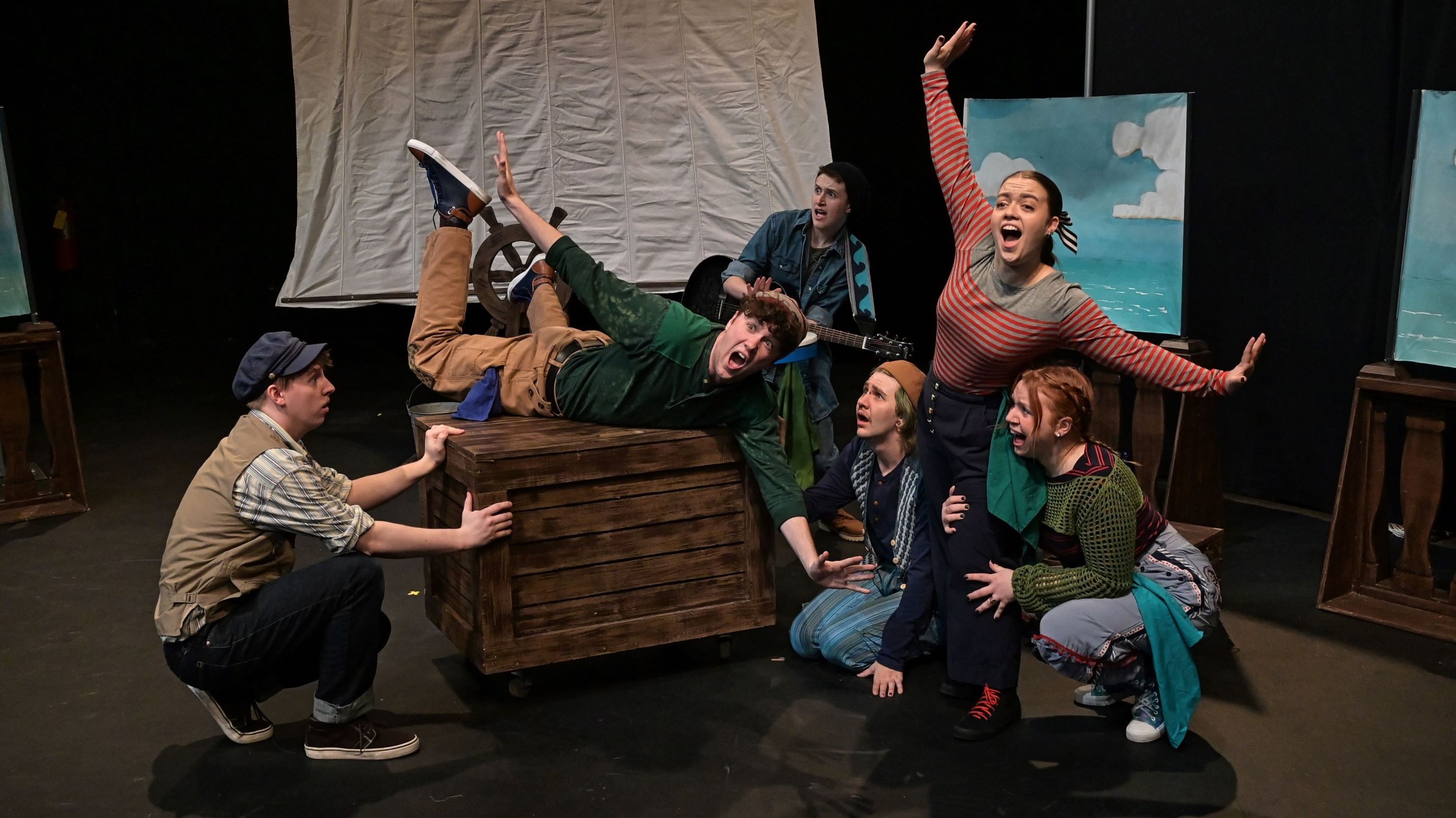 The department presented a groundbreaking devised Theatre for the Very Young production in fall 2025 called POPPED!. The show was created in collaboration with local preschoolers and was designed for audiences ages 0–6. The participatory production offered sensory-rich, mostly nonverbal performances, making theatre both age-appropriate and inclusive. UNI students helped facilitate “play labs” to develop the show, adapting their artistic practices to serve the youngest of audiences.
For students involved in the POPPED! project, community-based theatre opened new doors. While many UNI Theatre graduates pursue traditional stage careers, others go on to roles as teaching artists, arts administrators, community engagement directors, nonprofit leaders and more, fields where communication, creativity and empathy are essential.
“The transferable skills we develop in our program are vast,” Kahl says. “Theatre students are trained to listen to others, empathize with different situations, and take an abstract idea or two-dimensional script and turn it into action. We give students the tools to articulate an idea; plan, prepare, and design the idea; mobilize others to help execute the idea; and successfully facilitate or perform the idea for a public audience. Those are the hallmarks of changemakers and engaged citizens.”
Beyond enriching students and the community, the Department of Theatre’s outreach initiatives are about sharing the transformative power of theatre – an art form that celebrates humanity, teaches us powerful lessons, and brings us together.

“Theatre is distinctly human,” says Kahl. “In a world of AI, video streaming, and social media, theatre reminds us what it means to be in the same place as others, to empathize, to appreciate the abilities of others. Ultimately, I believe that theatre is for everyone, and because of this, theatre artists have a great responsibility to create meaningful art that can be enjoyed or engaged with by all different community members. At the heart of what theatre should be is a desire to serve our community by entertaining them, challenging them, and reminding them of their humanity.”