
Filling gaps in secondary education: the new MAT
Filling gaps in secondary education: the new MAT
In fall 2025, University of Northern Iowa launched a new online pathway to teaching: the Master of Arts in Teaching (MAT) in secondary education.
The program allows individuals with a bachelor's degree in a content area like math, science or business to channel their expertise into secondary school teaching by completing coursework in teaching across five semesters. The 34-credit-hour graduate program addresses two pressing needs at once: enabling working professionals to transition into teaching while helping Iowa school districts fill hard-to-staff positions.
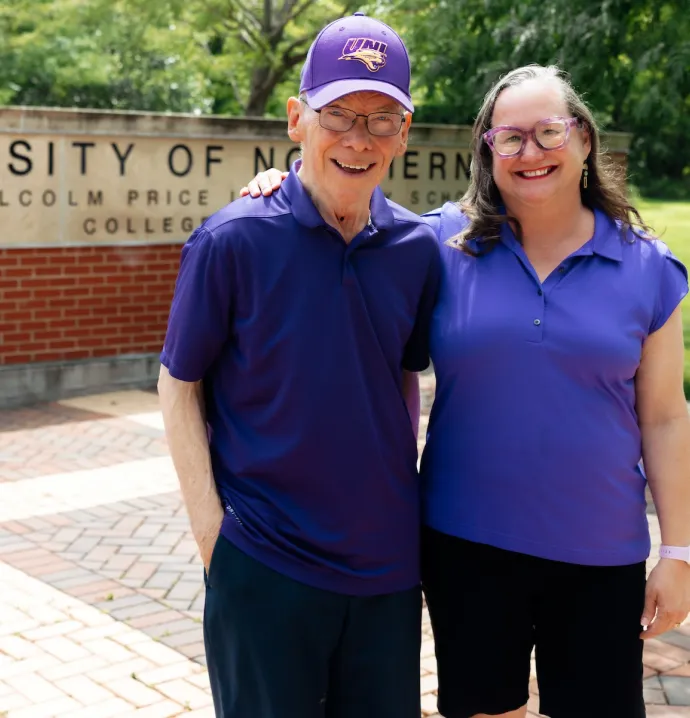
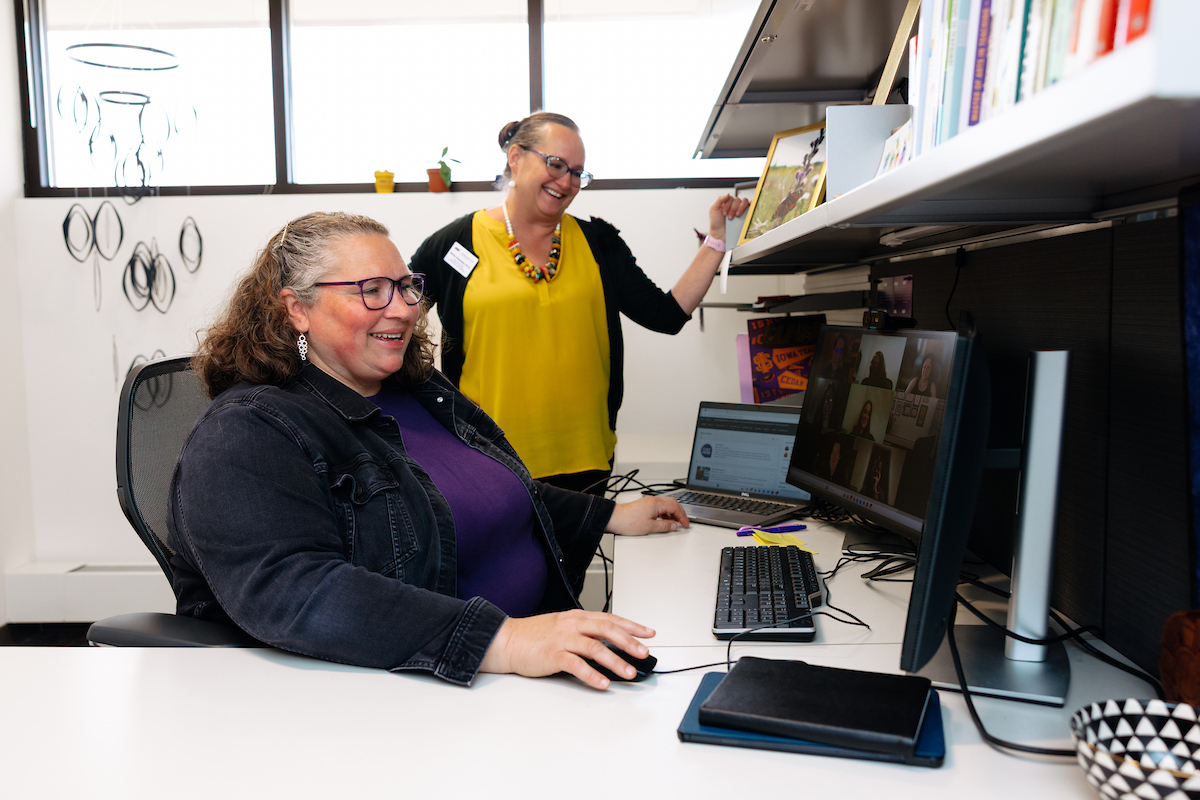
Becky Wilson Hawbaker, head, Educational Foundations and Professional Experiences, oversees the MAT program — currently the sole graduate program housed within her department. She said the MAT grew out of the success of UNI's online teacher preparation programs, including the Purple Pathway for Paraeducators and the Online Transfer Programs for early childhood and elementary education.
Those programs generated increasing interest from individuals seeking similar opportunities for secondary licensure, particularly working professionals with undergraduate degrees in content areas such as math, science, art, English, social studies, business and world languages.
“I also routinely field calls and emails from school districts who cannot fill open teaching positions, particularly those that require secondary and special area licensure, so there is a definite demand,” Hawbaker said.
In our class discussions, they can make connections and applications that are wider-ranging, and they ask so many great questions.
A calling for greater impact
At its core, the MAT is designed for people who are passionate about their subject matter and feel called to teaching as a way to make a greater impact. To accommodate working professionals, the program was built with flexibility in mind. It uses rolling admissions, allowing students to begin in any semester and attend either full-time or part-time.
All courses are offered online and in the evenings through a combination of synchronous and asynchronous instruction. Although UNI's College of Education is often associated with elementary and early childhood education, the MAT in secondary education expands the college's reach and legacy in educator preparation.
“Because the content preparation is already complete, the focus of the MAT is on how, rather than what, to teach,” Hawbaker said.
As both a department head and instructor, she has found that MAT students bring a wealth of professional and life experiences to the classroom. “In our class discussions, they can make connections and applications that are wider-ranging, and they ask so many great questions,” Hawbaker said.
For some students, returning to school has come with challenges, including learning new technologies and online learning platforms. Others are balancing significant personal and professional responsibilities while completing graduate coursework.
“But all of us have supported each other in learning, showing grace with our mistakes, and finding success together,” Hawbaker said.
The program's initial enrollment goal for fall 2025 was 10 students. More than 20 students were on track to be in the program by fall 2026, and the first graduating class is expected in spring 2027.
Cheryl Meller, recruitment coordinator for the college’s Office of Graduate Studies and Research, has seen interest from a wide range of prospective students. Some are still completing their bachelor's degrees and discovering a desire to teach, while others graduated more than 25 years ago and are looking for a career change.
“Many of our potential candidates are motivated by seeing shortages in local schools and feel a calling to work with youth,” Meller said.
She has also seen interest from individuals already working in schools as paraeducators or in administrative roles who discover a passion for working with students and decide t to pursue teaching.
Meller notes a common question — or misperception — is the program’s focus. It’s intended for students to build upon their undergraduate degree — for example, an engineer ready to teach science or STEM education vs. an artist ready to switch to teaching English. She works with students’ individual queries to help determine whether the MAT program is the right fit and recommends other pathways based on each student’s individual goals.

Don't be afraid to try. Don't quit. The experience of life is the best part.
A program melding demand and desire
Since the MAT program launched, Meller has observed an especially strong interest in science education — a welcome development given the state's ongoing teacher shortage in that area.
One such student is Scott Steffen, who decided in his 50s to pursue his goal of becoming a science teacher. “Science is an exciting and fascinating field that I enjoy sharing with people,” he said. “Teaching is a place where I can share that excitement with other people. Steffen has especially enjoyed a key part of the MAT program: clinical experiences in schools.
“It’s been really fun,” he said. “The students and teachers expect you to be part of the classroom. You are included in everything and receive usable criticism, especially from the students.”
Ultimately, the program's early growth demonstrates both the demand for flexible pathways into teaching and the desire many professionals have to share their expertise with the next generation.
For other students considering the MAT program in secondary education, Steffen shared this bit of advice: “Don't be afraid to try. Don't quit. The experience of life is the best part.”