

Completed UNI nursing space introduces students to even more cutting-edge technology
Completed UNI nursing space introduces students to even more cutting-edge technology
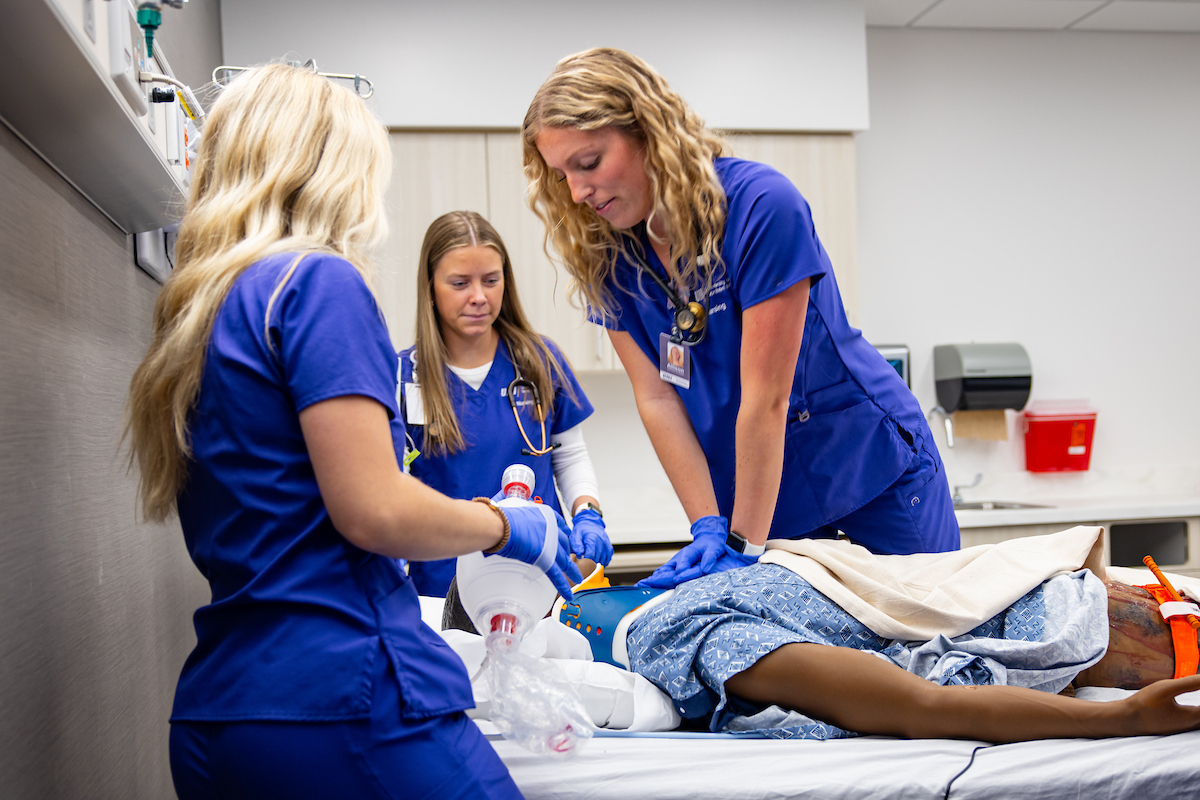
If you walk into the main floor of the Innovative Teaching & Technology Center on UNI campus, you might think you were just transported to a hospital. The newly renovated space has a nurses’ station and rooms with patients in need of care. This isn’t a health care facility, but it is training the next generation of health care professionals who are studying in the Bachelor of Science in Nursing program.
After two and a half years of work, the final building renovations wrapped up at the end of January. The space has brought the vision of Chief Academic Nursing Administrator Nancy Kertz to life.
“It feels pretty incredible to see it come full circle from the initial conception of what it should be to final completion,” she said.
Kertz describes the newest area as a mini hospital unit. It contains trauma, critical care, labor and a delivery and pediatric suite. Medical manikins, known as high-fidelity simulators, can have amputated limbs. One can deliver a baby. Others are children themselves.
“Many programs have one, maybe two simulators,” said Kertz. “Maybe they have an OB simulator and another high-fidelity simulator. We have multiple high-fidelity simulators and even a pediatric, premature infant simulator.”

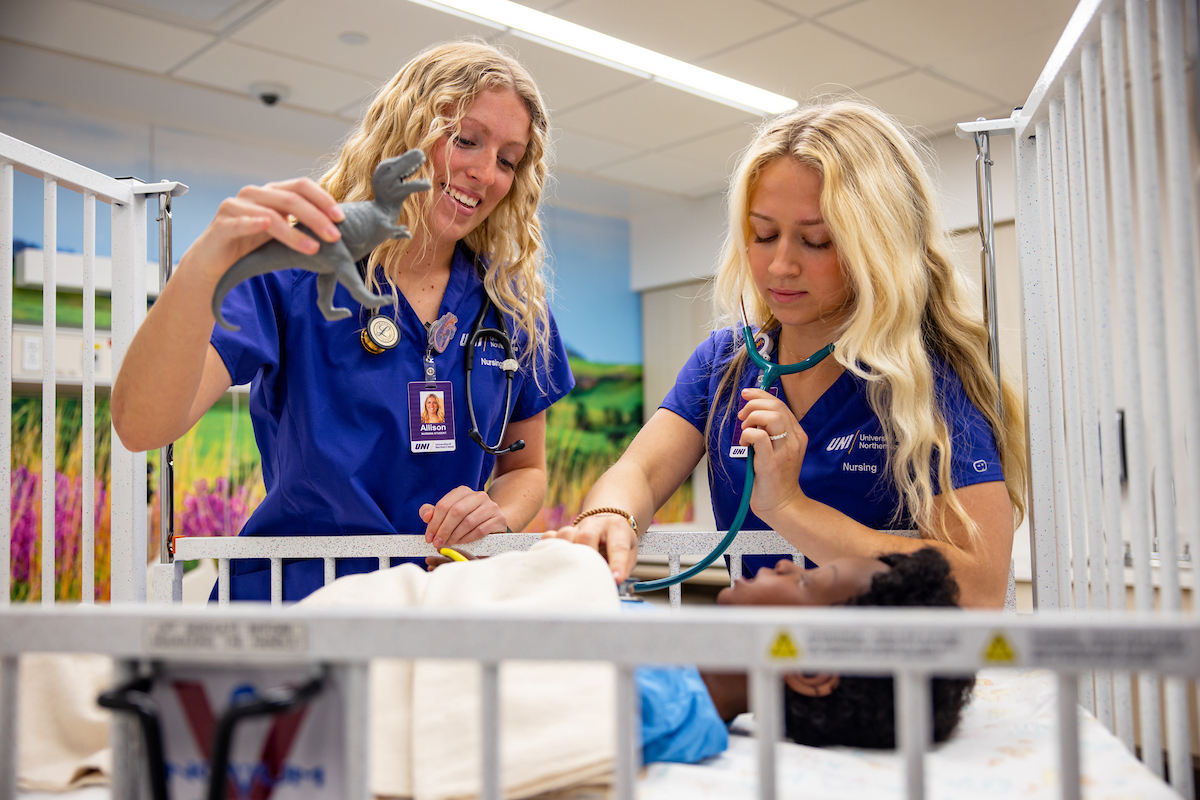
Kertz believes these additions reflect the evolution of UNI’s BSN program to emphasize trauma care, which she describes as the most difficult scenario to prepare for in school. Wherever the nurses may end up working upon graduation, Kertz believes the skills they learn in these suites will provide a strong foundation in trauma care.
“I want our students to be able to work anywhere in Iowa, whether it's a rural, critical access hospital, or an urban setting in a level-one trauma center,” she said. “We just want them to have competencies and proficiency in trauma care.”
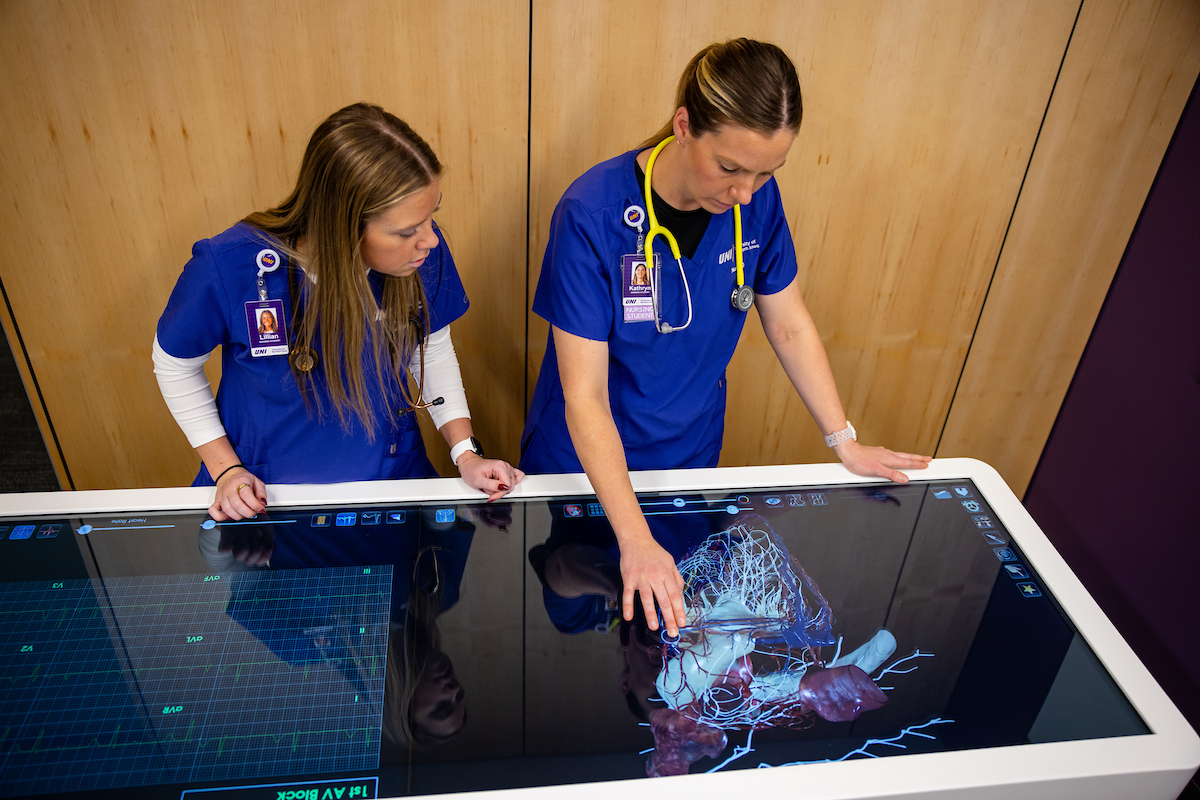
The unit also contains an anatomage table – a seven-foot-long touch-screen tablet containing digital cadavers developed from real people. It’s yet another way UNI leverages cutting-edge technology to give future nurses hands-on experience that emulates a hospital setting.
“There are three-dimensional photographic images created from cross-sections of the human body that have been digitally reconstructed,” said Kertz. “Having observed autopsies throughout my career, I find the level of realism remarkably accurate. Students are able to move through layers of tissue and anatomy in a way that closely reflects real human structure — it’s truly impressive.”
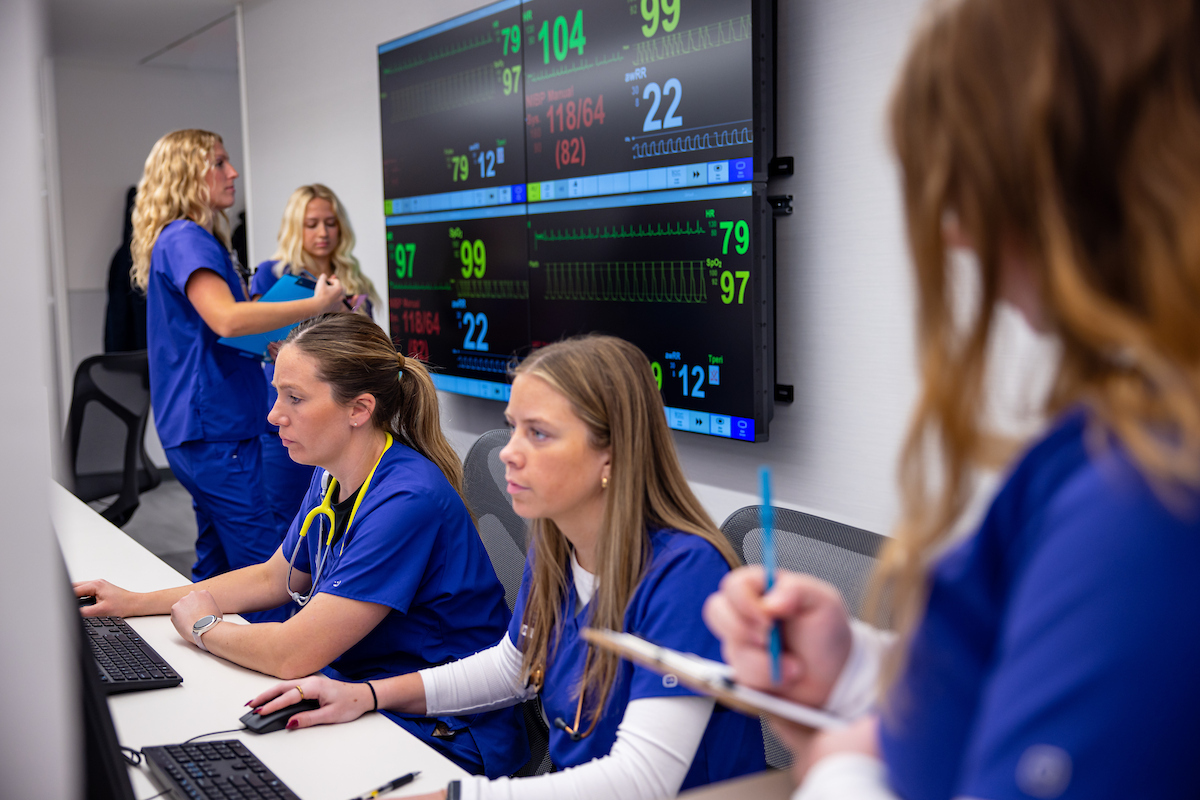
At the nurses’ station, the computers house a simulated electronic medical record system where students can document patient care and review labs and other diagnostics. There is also a medication administration area where students can find medications and IV solutions. There are four rooms for students to discuss simulation scenarios before and after they are done. Lastly, there are three faculty offices and a storage area.
While advanced technology plays an important role in preparing nursing students for safe and competent clinical practice, Kertz emphasizes that compassionate, patient-centered care remains central to the University of Northern Iowa’s approach to nursing education. This emphasis is reinforced even during simulation experiences, where students are expected to engage with simulated patients as they would in real clinical settings.
“In our simulation suites, students are never allowed to refer to the experience as ‘pretend,’” said Kertz. “They are expected to interact with simulated patients using professional, therapeutic nurse–patient communication. I’m continually impressed by how our students introduce themselves, establish rapport, and communicate with respect and professionalism, skills that reflect genuine readiness to care for real patients.”
Students were very impressed the first time they entered the space.
“I was in awe the first time I walked through here,” said Keatan Pfantz. “The manikins we have are very realistic, and the stuff that we can actually do on them is going to help us long-term in our nursing practice.”
“When I walked in, I got goosebumps immediately,” said Allison Sessler. “I was so excited. It's just really awesome to see such real-life settings.”


