
A step ahead: UNI’s first nursing students enter final year with extensive clinical experience
A step ahead: UNI’s first nursing students enter final year with extensive clinical experience
Students in the first-ever cohort of the University of Northern Iowa’s nursing program are entering their final year with strengthened clinical skills and a strong path to their future as registered nurses.
The first group, which began with just 24 students, is set to become the program’s first graduating class in spring 2027.
For third-year nursing students and Iowa natives Olivia Wood, Keatan Phantz and Emily Frey, the past semester marked the completion of their first clinical experiences.
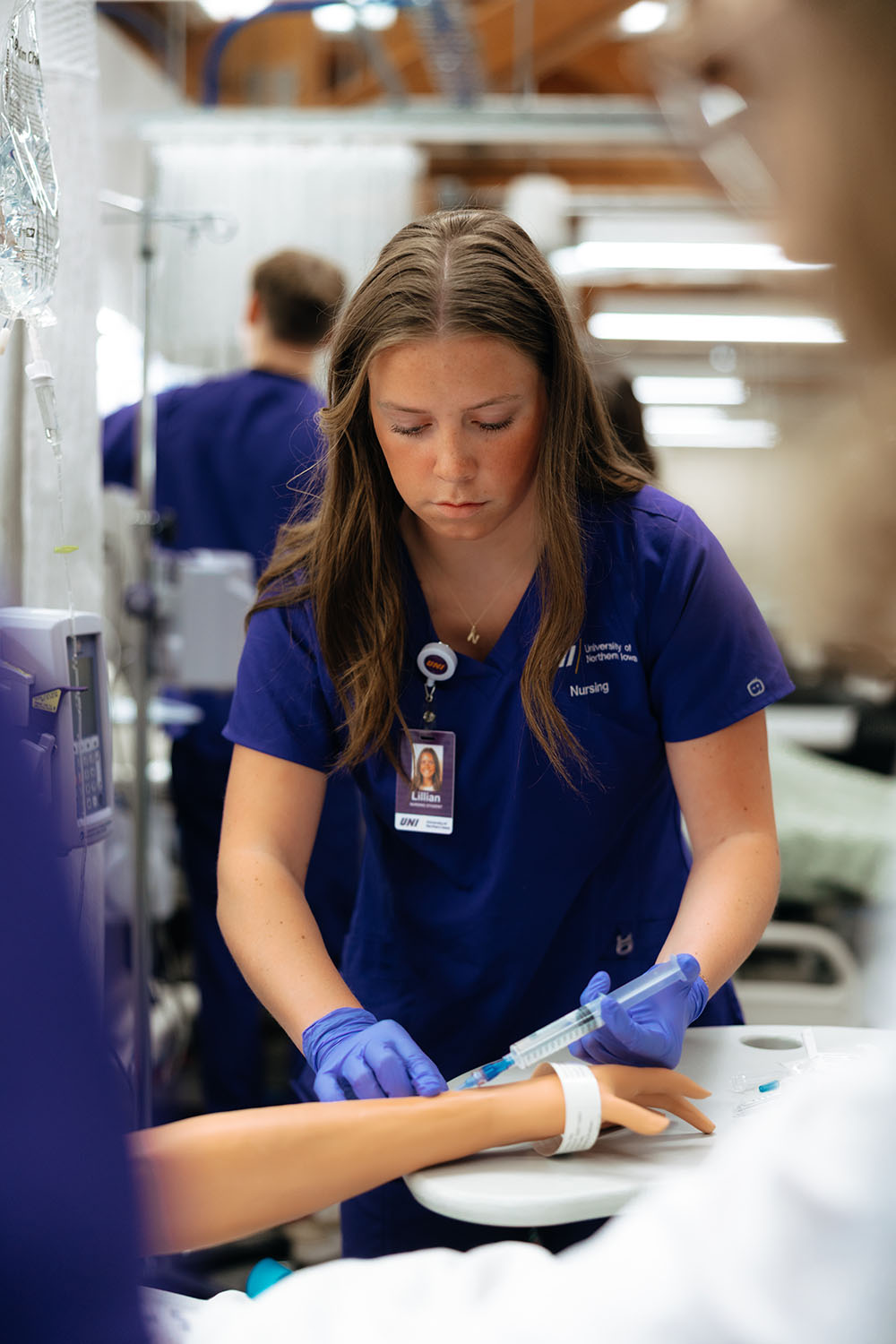
Clinicals place nursing students directly in healthcare settings, where they work alongside practicing nurses and advisors for four to five weeks. The experiences are tailored to the courses students are taking, allowing them to apply classroom knowledge to real-world scenarios.
“We do hands-on work in our daily classes, but being able to get out there and see the public, it creates a hands and brain connection,” said Wood, native of Robins.
“Once we get into the clinical setting, I feel so much more ready than if we were only doing lecture,” said Frey, who is from the community of Postville. “I’m able to go in there and be confident with myself and my skills. Rather than it being the first time I've ever done a manual blood pressure on somebody. I just feel a lot more ready.”
Beyond technical skills, the student nurses say the clinical experience helped them develop one of nursing’s most important competencies — communication.
“It's a better experience for us overall to not only talk to the patient in real life but to the family and learn how to communicate to both of them and help them understand what’s going on with their condition,” said Phantz, whose hometown is State Center.
The program also offers students opportunities to gain additional professional experience. Members of the cohort have secured internships with respected healthcare locations through UNI partnerships.
The students’ skills were able to shine when a group attended the National Student Nurses Association conference.
“We came back feeling very confident about what we have learned throughout our experience here at UNI,” said Phantz, who recalled discussing questions they could expect on future national licensing exams.
“We were bouncing off of each other and knew what the answers were,” said Phantz. “Other nursing students were surprised that we were a year below them but knew more. I knew we are very well educated here at UNI and it’s been very beneficial.”
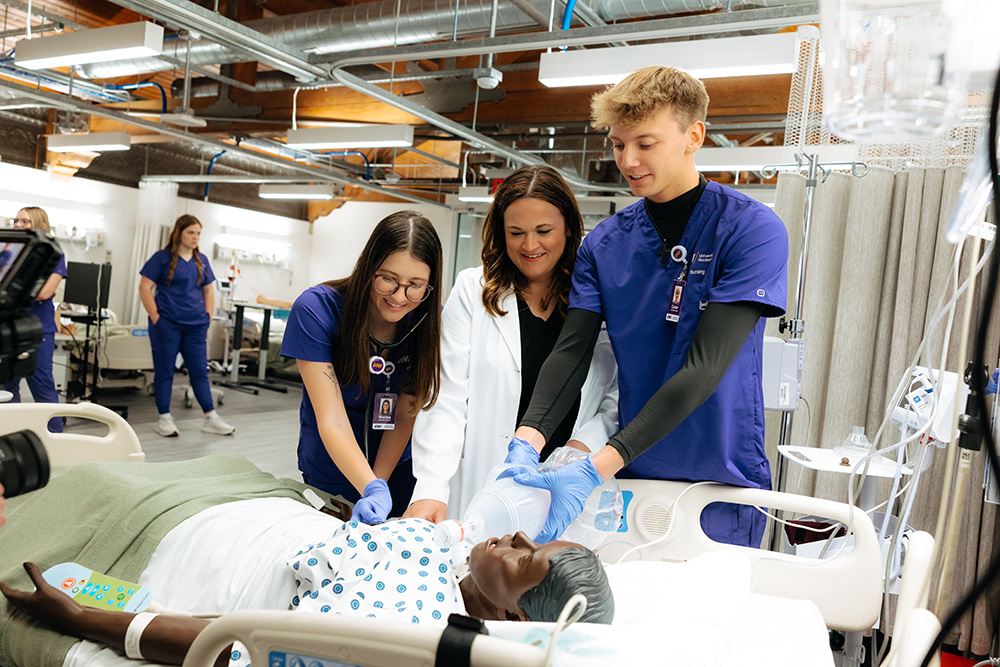 Much of the students’ preparation, according to Nancy Kertz, department head of nursing and public health, stems from the program’s focus on developing practice-ready nurses.
“When they finish their program and launch into their first role as a registered nurse, we want them to have very strong clinical judgment skills so that they can anticipate what is happening around them,” said Kertz. “And we are seeing evidence that our students are getting there.”
Kertz credits the program's faculty for helping students make that transition.
“We have phenomenal nursing faculty. They are very high-performing and practicing nurses themselves, so they are experts in their field and our students see that and look at them as role models,” Kertz said. “Our faculty are the heart of our program. They are so good at mentoring and coaching our students.”
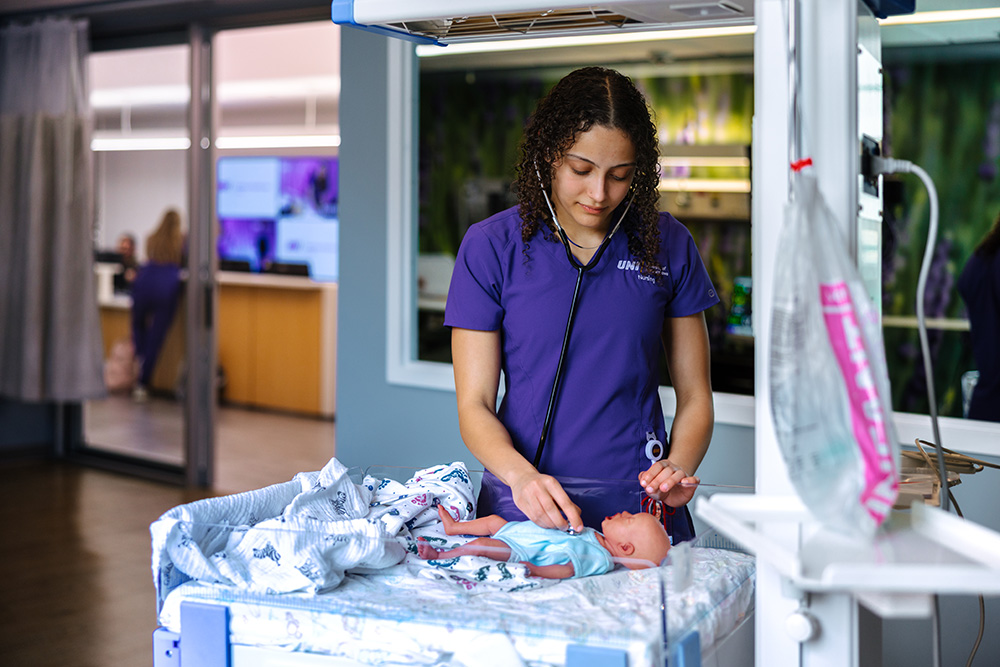
Nursing students also benefit from UNI’s new nursing facility, which was recently completed and provides advanced simulation training that mirrors real clinical environments for trauma, critical care, labor and delivery and pediatrics. High-fidelity adult, pediatric and infant simulators can replicate a wide range of medical scenarios, including childbirth and emergencies.
The resources offered continue to grow as program enrollment increases. UNI launched an accelerated Bachelor of Science in Nursing program this fall designed for students who already hold a bachelor’s degree in another field or have significant college credits.