
TEACH Studio: A space to learn and collaborate
TEACH Studio: A space to learn and collaborate
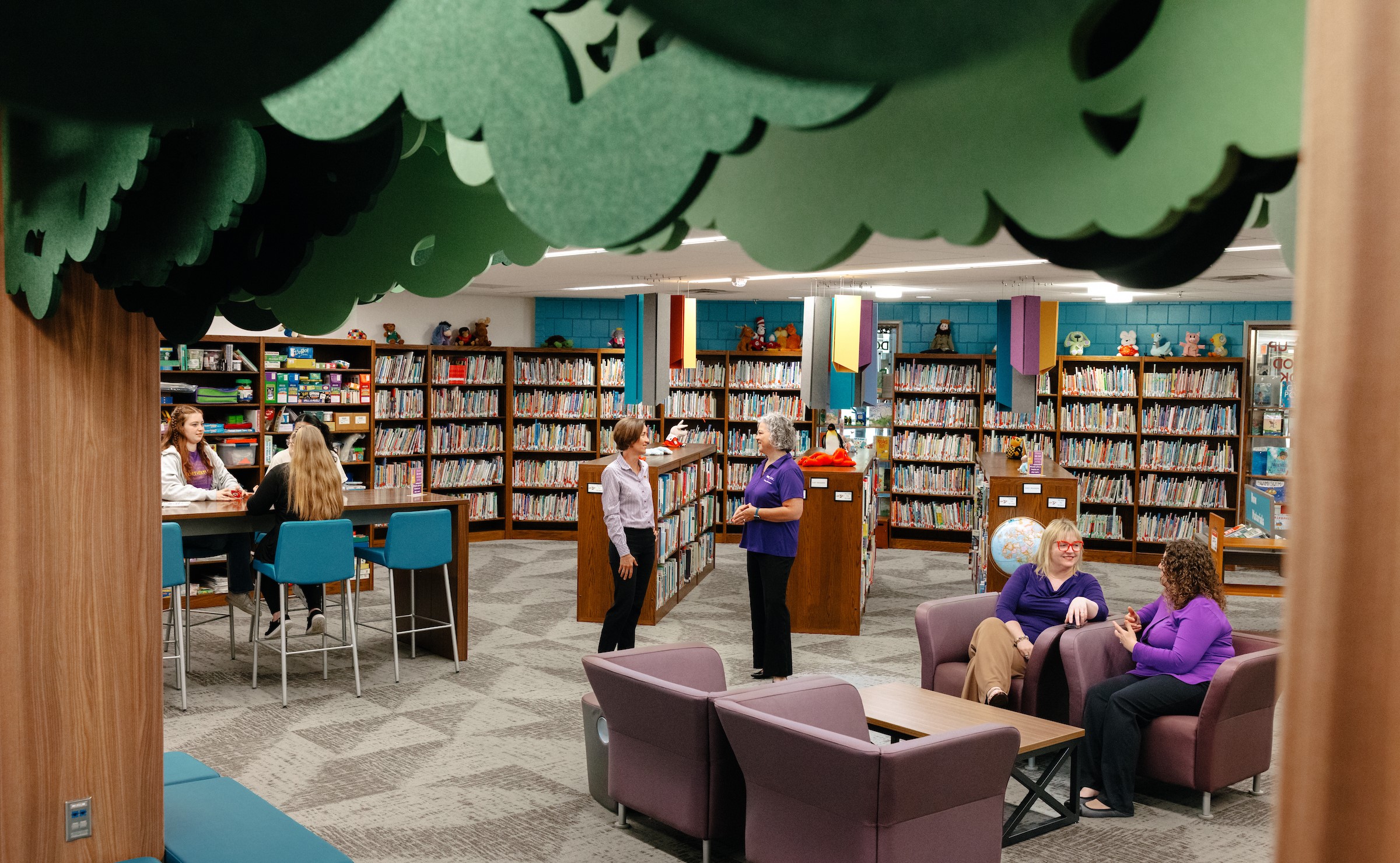 Future teachers gather around tables testing educational technology they may one day use in their own classrooms.
Nearby, a student smiles as she recognizes a clue to a favorite children's book in a colorful mural. Another rises from soft seating beneath an artfully crafted tree to browse materials for an upcoming clinical placement.
These scenes represent the vision behind the newly refreshed TEACH Studio, a reimagined hub for future teachers in the Schindler Education Center jointly developed by UNI’s Rod Library and the College of Education.
A choice to collaborate
 TEACH is short for Teacher Education and Collaboration Hub. The studio emerged from conversations that began more than five years ago during the COVID-19 pandemic. Leaders from the library and the college recognized that resources supporting teacher education students were spread across multiple locations.
“It became very clear we had overlap that was causing confusion for students,” says Dean Theresa Westbrock, Library Services. “We wanted to find a way to collaborate and elevate these really important services.”
At the same time, faculty in UNI’s Educator Preparation Program were redesigning the undergraduate teacher education curriculum. That work aligned naturally with the vision for an updated learning space.
“We saw this as an opportunity to create a model school media center and library with space for collaboration and as a place for students to gather,” says Dean Colleen Mulholland, College of Education.
The redesigned curriculum places strong emphasis on understanding the needs of different learners and how technology can support instruction.
“The different ways all children learn became a throughline in the curriculum,” Mulholland says. “We also recognized that technology, however defined, would be present in future teachers' experiences in everything they’re doing. We needed a space that would foster the use of technology and help students understand how different kids learn differently.”

We saw this an an opportunity to create a model school media center and library with space for collaboration and as a place for students to gather.
An enhanced educational space
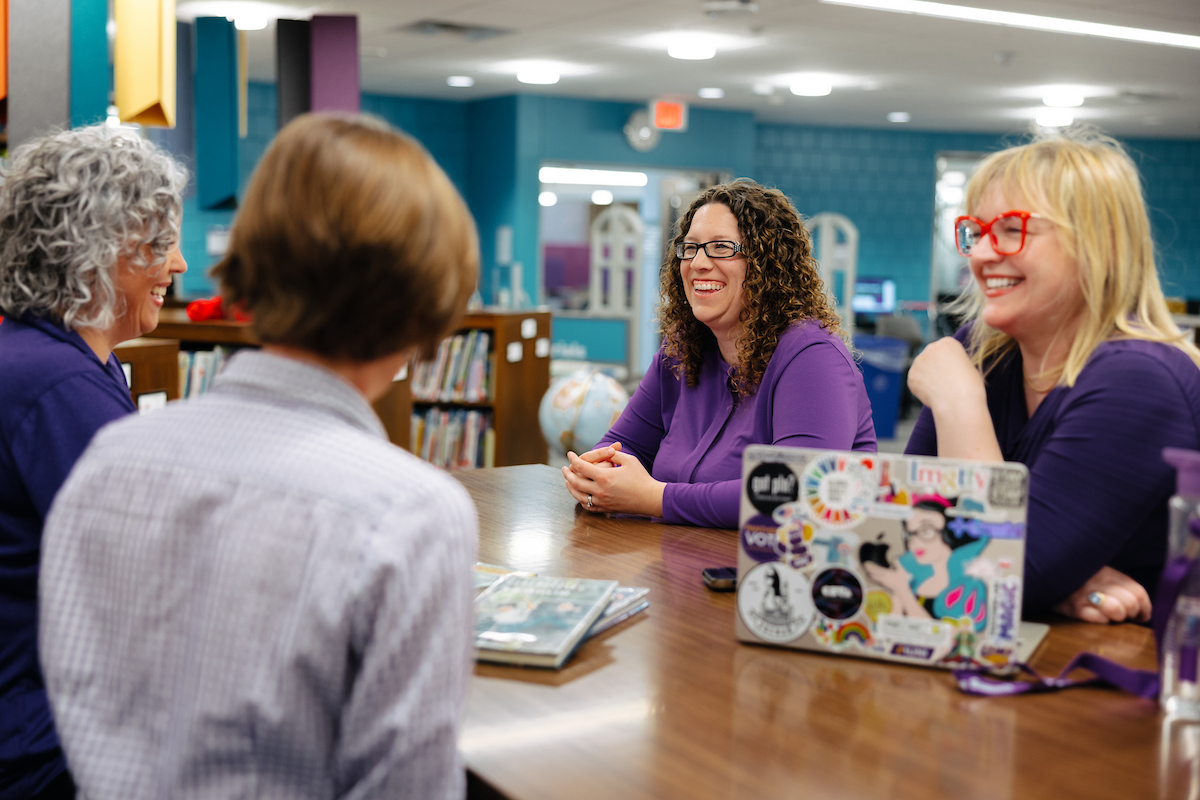 Built with input from stakeholders across campus, a new vision emerged for the space previously known as Instructional Resources and Technology Services. It now combines the permanent home of Rod Library’s youth collection with enhanced educational technology and other existing resources and tools in a flexible learning environment.
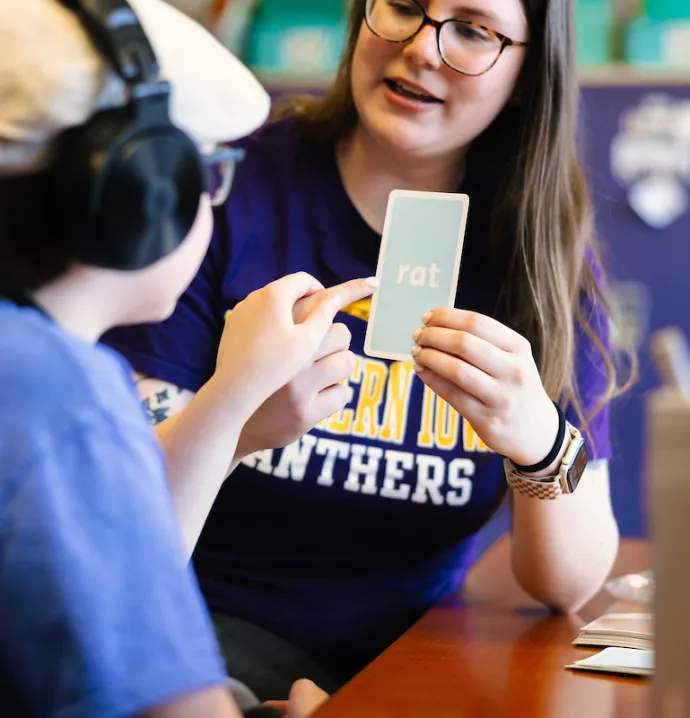
At the center of the TEACH Studio is the curated youth collection which models best practices in school and public libraries and accounts for nearly one-third of all Rod Library circulation. Following the consolidation of materials previously housed in IRTS and the library, the collection moved to the studio in June 2025. Pre-service teachers can access picture books, children's and young adult literature and non-fiction, learning games, manipulatives and technology tools.
“This is a space that offers a variety of resources to help the pre-service teacher learn to teach. Whatever they need, they can get it all here. These resources help them in their coursework, field experiences and support the learning needs of students in their classrooms,” says Katie Nedwick, TEACH Studio coordinator.
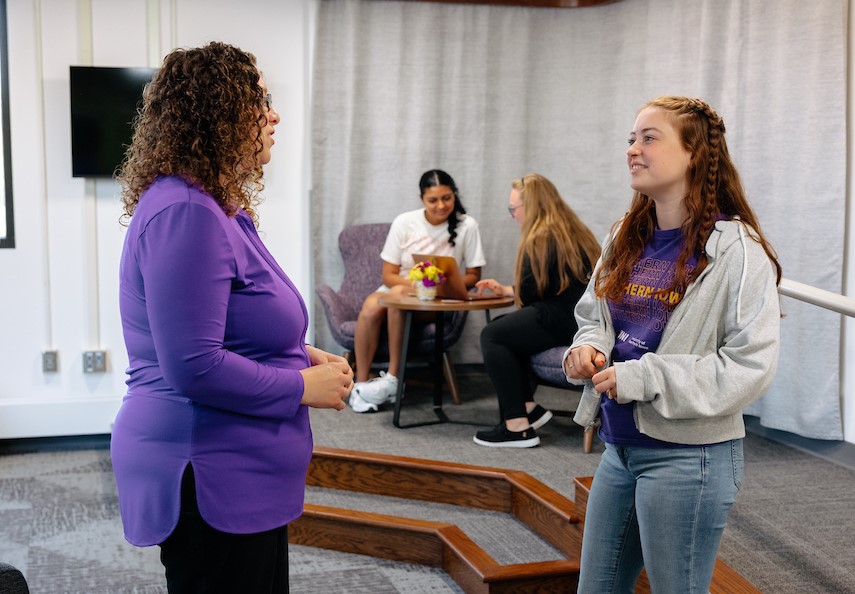
Students can also practice presentations in a multimedia room equipped with a green screen and digital video technology or explore robotics and coding in a technology playground. A new student lounge adds to the study nooks and collaborative workspaces where students can gather.
Expanding educational technology
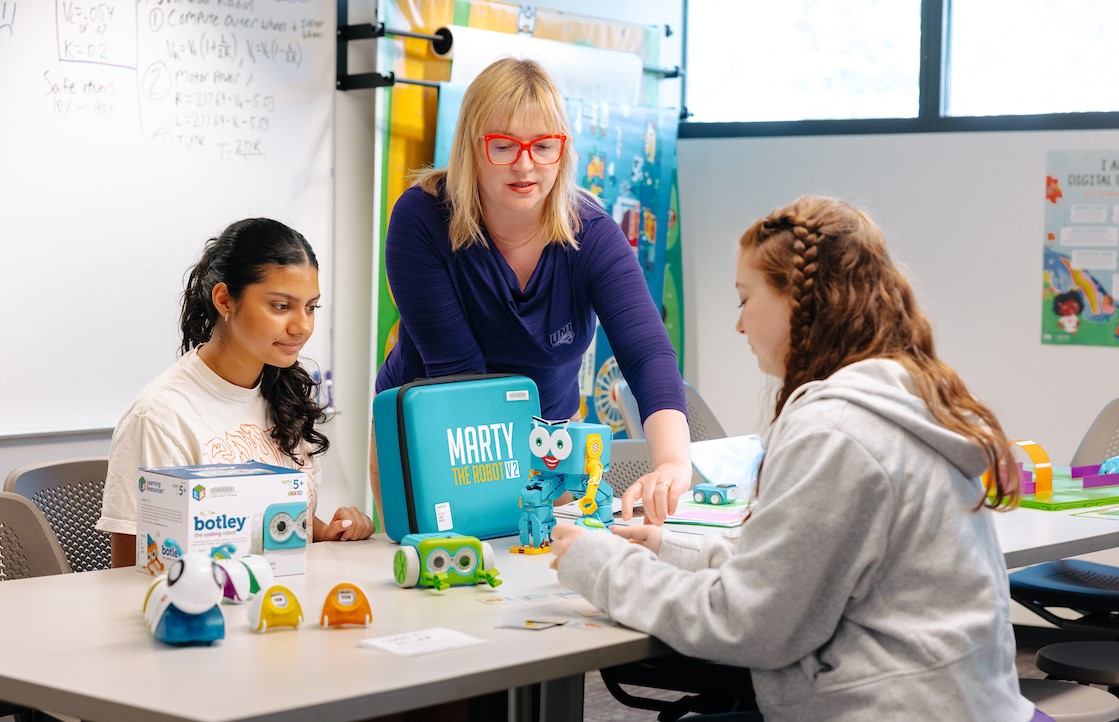 Since reopening in summer 2025, the technology playground has become one of the most popular features of the TEACH Studio. The area allows students to explore coding and robotics tools, app-enhanced learning kits and hands-on, screen-free educational toys that build computational thinking.
The studio’s technology offerings will continue to grow thanks to a $130,000 grant from the Roy J. Carver Charitable Trust. The funding supports five modular collections — Access & Adapt, Create & Communicate, Code & Construct, Design & Display and Tech on the Go — that expand access to instructional and assistive technology.
“When we were redesigning the curriculum, we knew new technology could not be an afterthought,” Mulholland says.
Magdalena Galloway, associate professor of instruction, works closely with faculty and students to integrate those resources into coursework and field experiences. Students can test tools, check out equipment and practice instructional strategies.
“Tech resources are visible and easy to use,” Galloway says. “That encourages experimentation and creativity.”
Adds Nedwick: “Expanding access and exposure to adaptive and educational technology will help prepare our pre-service teachers for their future work.”
Expanding access and exposure to adaptive and educational technology will help prepare our pre-service teachers for their future work.
A welcoming environment
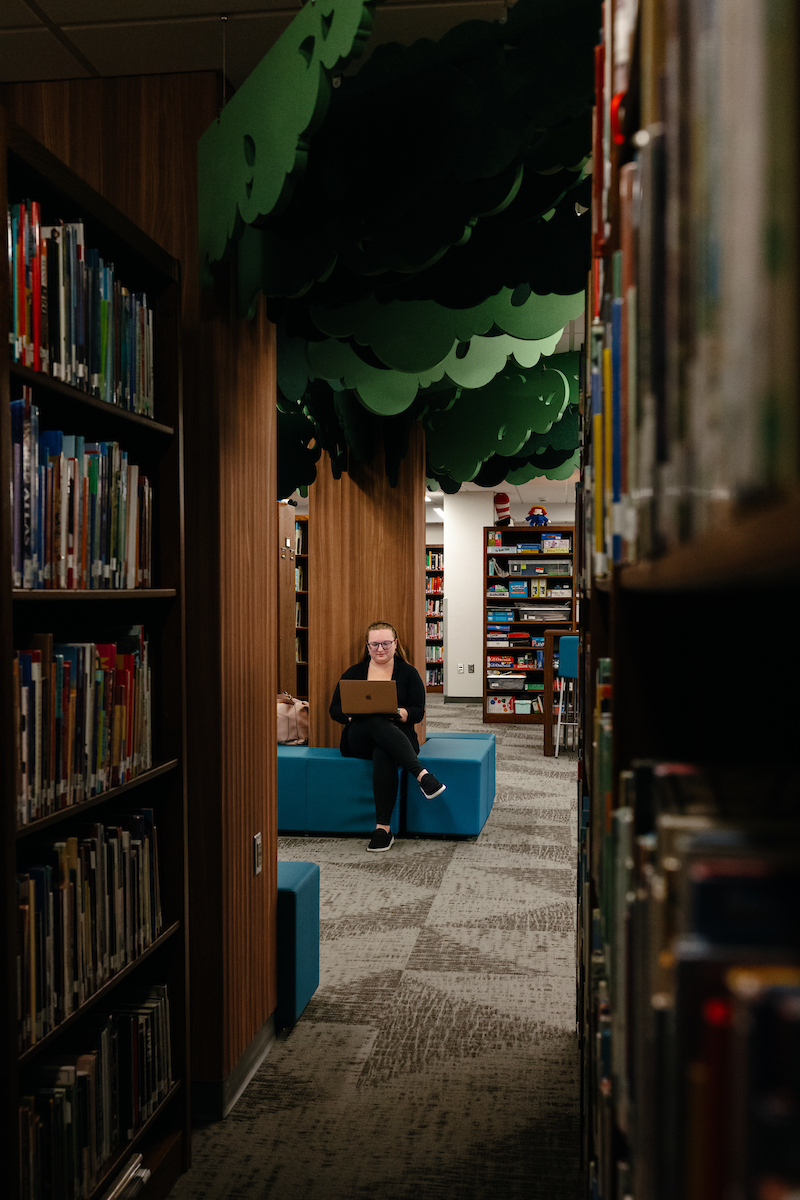 The studio’s physical design creates a welcoming atmosphere. Seating in the lounge, presentation room and in the central stacks area supports both collaboration
and individual focus. Fabric-and-wood tree structures inspired by a beloved feature from Rod Library and colorful noise-dampening felt sculptures add special touches.
Students quickly embraced the refreshed space. In its first 10 months, the TEACH Studio welcomed approximately 30,000 visitors.
“When I started in this position, I thought I may have to do some outreach to get students and faculty to use the space,” Nedwick says. “But they started using it from the get-go.”
Galloway says the TEACH Studio reflects how learning spaces themselves are changing.
“Instead of a traditional computer lab or a quiet-only space, it’s now a flexible, active environment where students can gather, study, create and collaborate,” she says.
The collaborative spirit behind the TEACH Studio is reflected in its visitors. The space has welcomed college classes, children from the UNI Child Development Center, local
educators, students from Cedar Falls and Waterloo schools, and leaders from the Iowa Department of Education.
“We are doing important work here,” Nedwick says, “and I’m thrilled to share that with others.”